Walk into any hearing clinic and you will hear a string of abbreviations: BTE, RIC, ITE, ITC, CIC, IIC. They all describe the same thing, where the hearing aid sits on or in your ear, and that one decision shapes almost everything else: how the device looks, how powerful it can be, how long its battery lasts, and which features fit inside it. Here is what each style actually means, in plain language.
BTE (Behind-The-Ear): the powerhouse
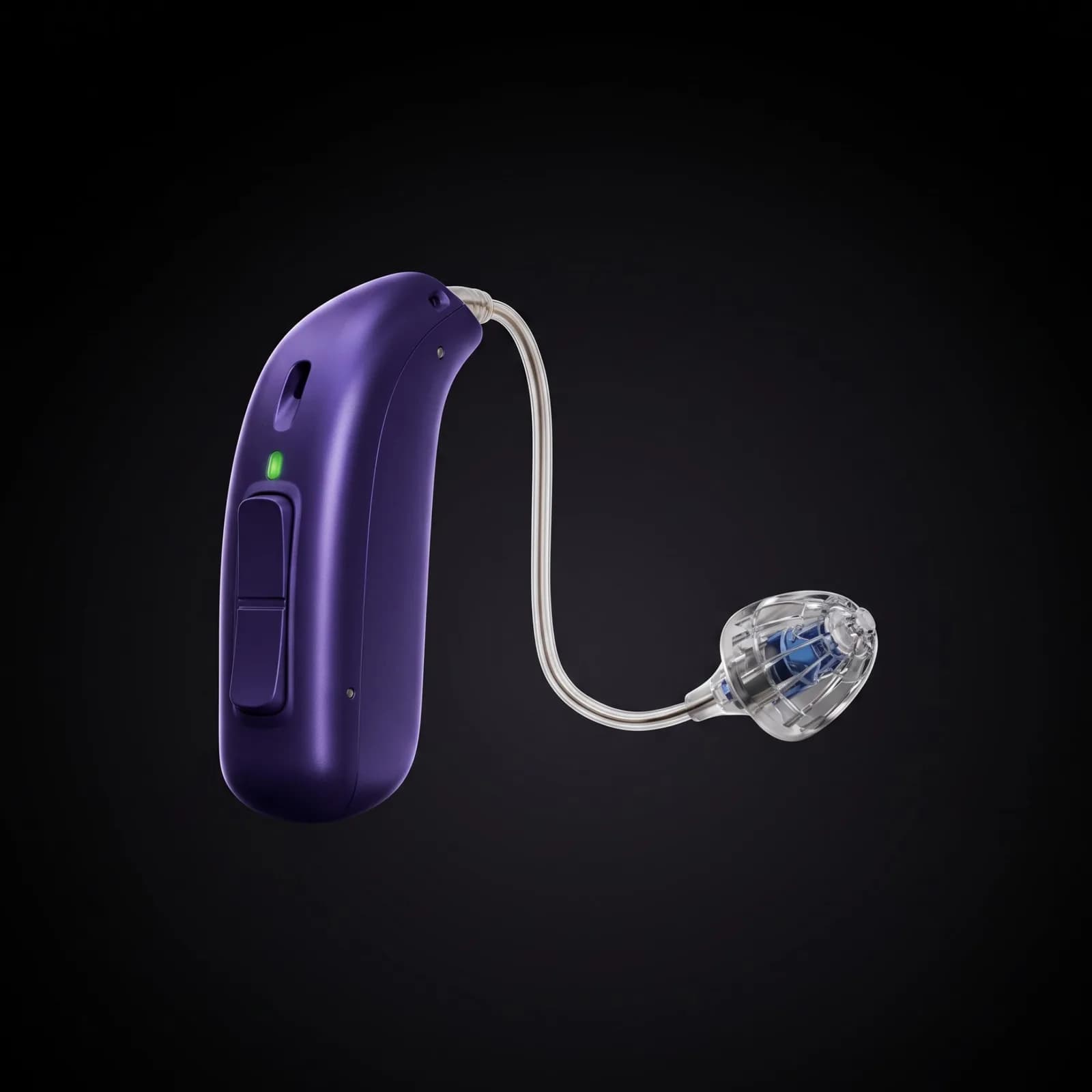
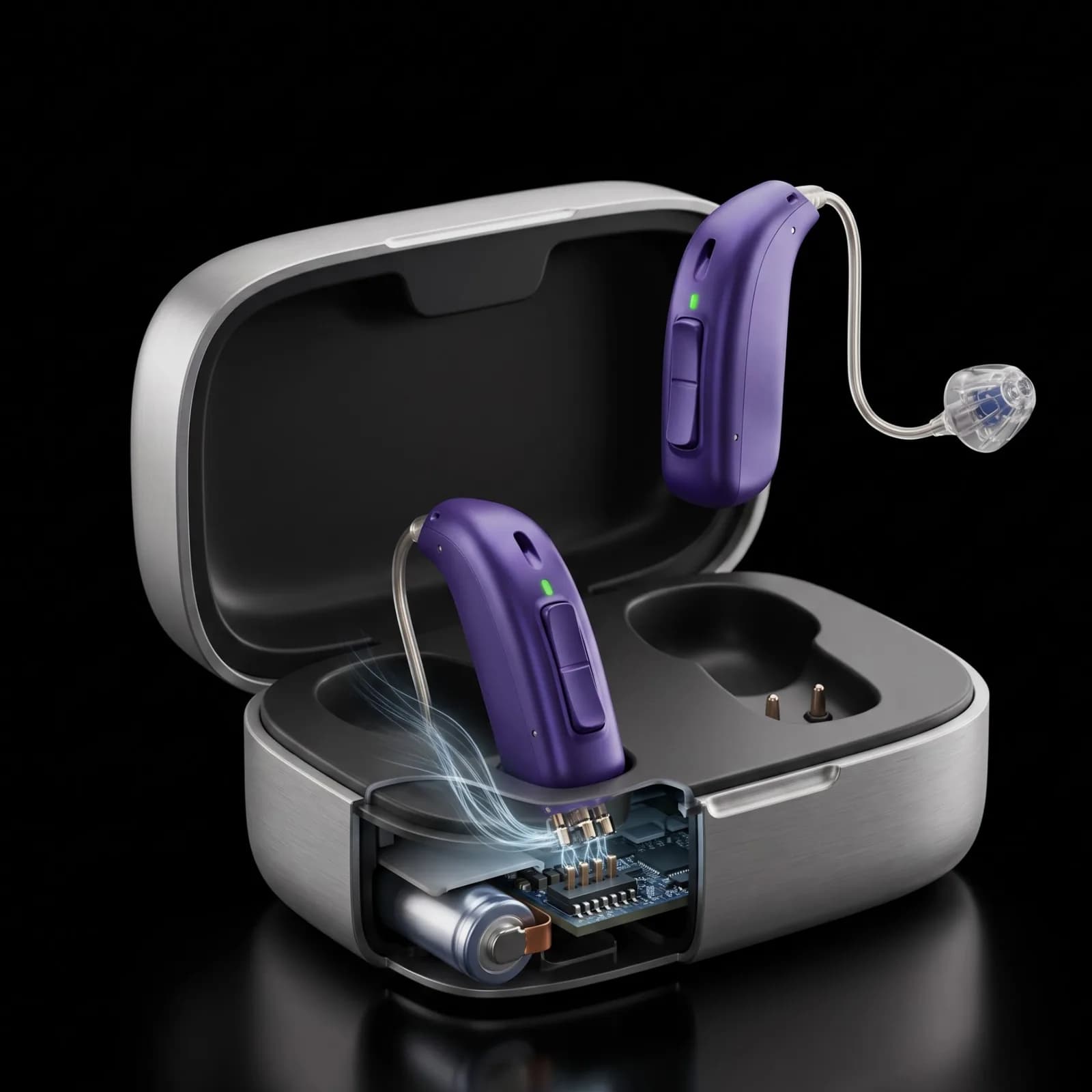
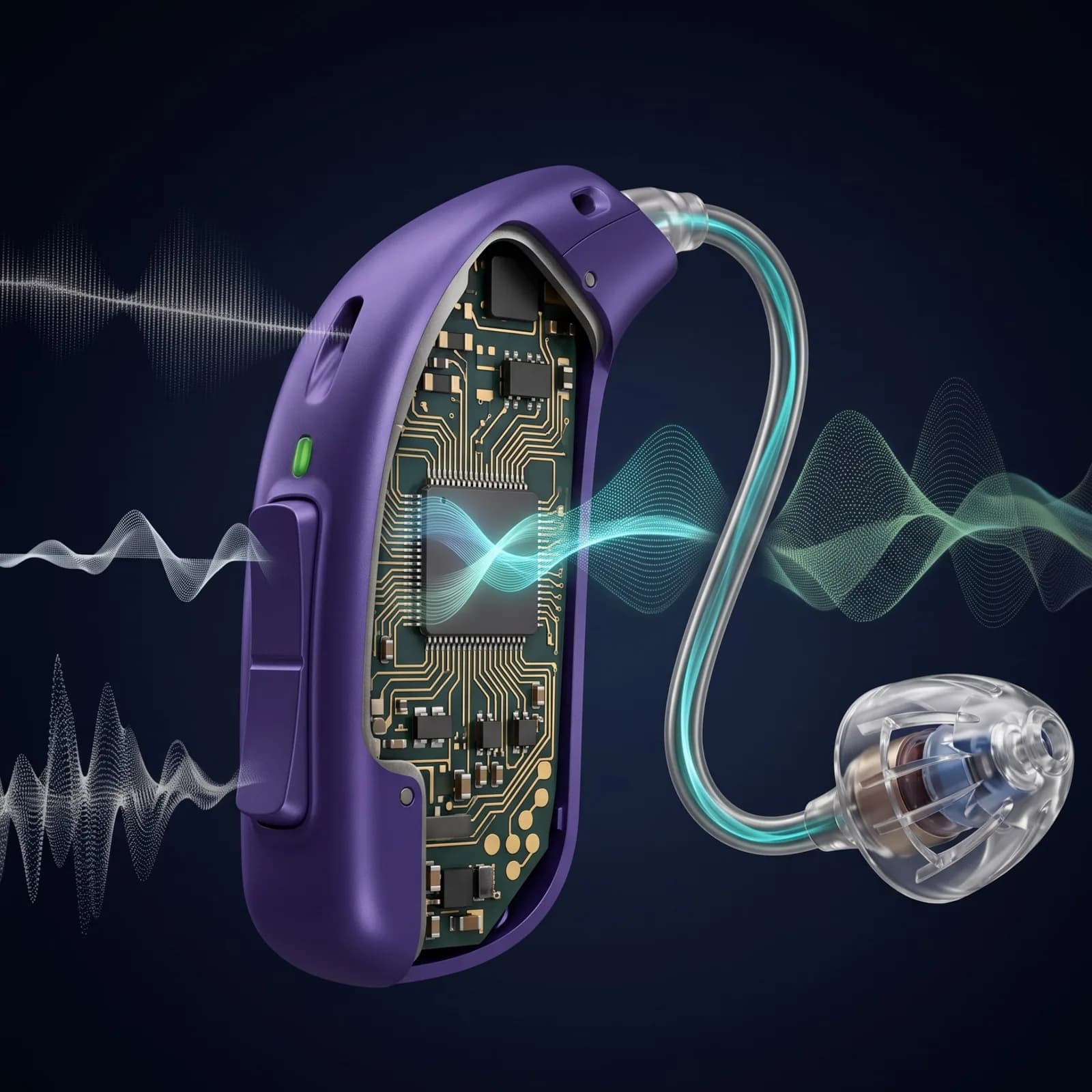
A BTE houses every component, microphones, processor, battery and speaker, in a curved shell that rests behind the ear. Sound travels through a slim tube into a custom ear mould. Because nothing has to be miniaturised into the ear canal, BTEs offer the most amplification of any style, which makes them the first choice for severe to profound hearing loss.
- Maximum power output, with Super Power variants for profound loss
- Large, easy-to-feel buttons, helpful for seniors and anyone with dexterity issues
- Robust builds with IP68 dust and moisture resistance, well suited to Kerala's humidity
- The longest battery life of any style, in both rechargeable and disposable versions
RIC (Receiver-In-Canal): the modern all-rounder
A RIC looks like a much smaller BTE. The trick is that the speaker, called the receiver, is moved out of the body and into the ear canal itself, connected by a nearly invisible wire. That makes the part behind the ear tiny, keeps sound quality natural, and still leaves room for rechargeable batteries, Bluetooth streaming and the latest processing chips. Most first-time wearers with mild to moderately severe loss end up in a RIC, and it is the style in which manufacturers usually launch their newest technology first.
ITE and ITC (In-The-Ear and In-The-Canal): custom comfort
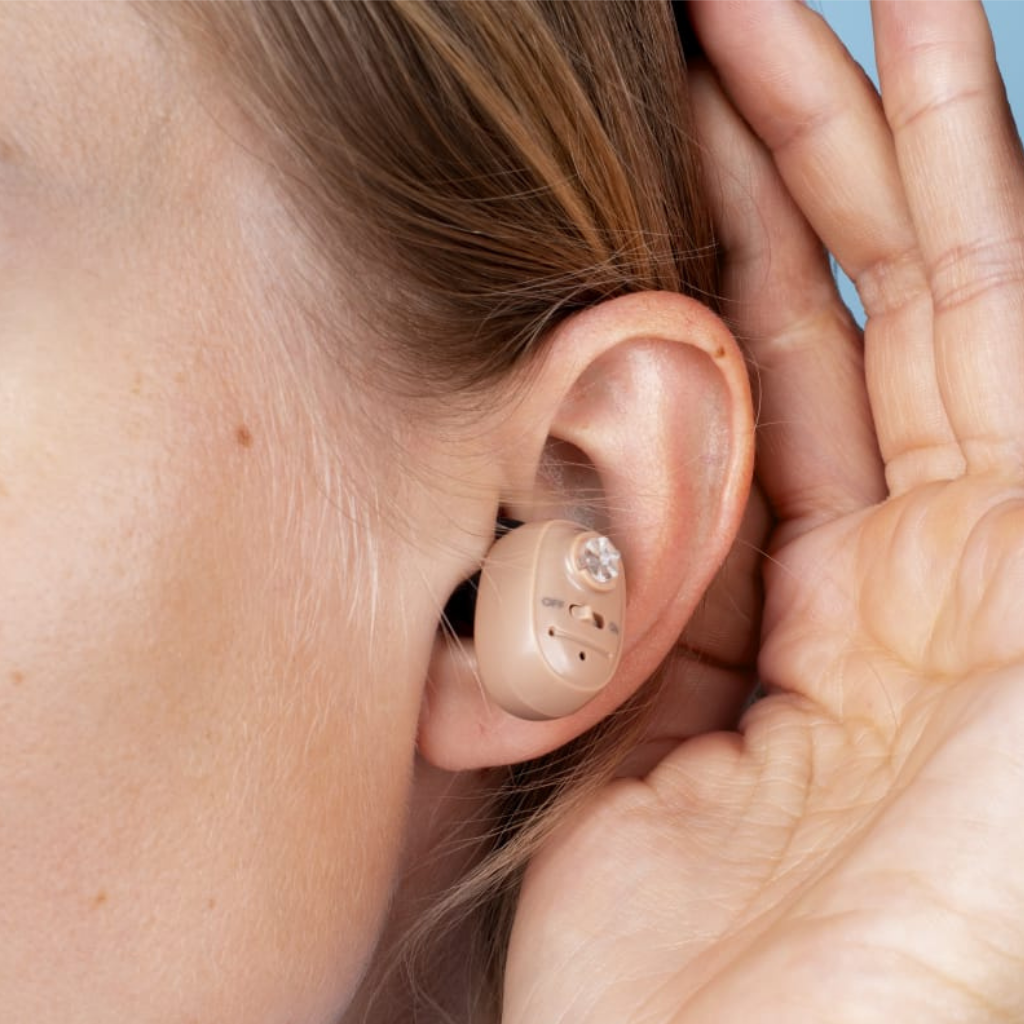
These are custom-made shells that fill part of the outer ear (ITE) or sit mostly in the canal opening (ITC). Every one is built from a 3D impression of your ear, so the fit is personal. They are easy to insert with one hand, keep everything in a single piece with no tube or wire, and modern versions still fit wireless connectivity and directional microphones.
CIC (Completely-In-Canal): discreet with a handle
A CIC sits fully inside the ear canal, with only a tiny transparent removal handle visible on close inspection. Despite the size, current CICs carry the same processing platforms as larger devices, so sound is processed the way your brain expects rather than simply amplified. Because the microphone sits inside the ear, your outer ear does what it has always done, catching and shaping sound naturally, which helps you sense where sounds come from.
IIC (Invisible-In-Canal): the hidden secret
The IIC is moulded to sit deep in the ear canal, past the point where anyone can see it. It is genuinely invisible in day-to-day life. The trade-offs are honest ones: the tiny shell holds a smaller battery, and deep placement limits some connectivity features. For people with mild to moderate loss who value complete discretion above everything, nothing else comes close.
So which type is right for you?
The honest answer is that your audiogram decides first and your lifestyle decides second. The degree and shape of your hearing loss rules some styles in or out. After that it becomes a conversation about what your days look like: video calls at Technopark, temple festivals, teaching a classroom, long drives on NH 66. At SoundBee we test your hearing, shortlist the styles that genuinely suit it, and let you experience them in the clinic on the same day, so the choice is made with your own ears rather than a brochure.
Rule of thumb: BTE for power and reliability, RIC for the best all-round technology, custom in-ear styles for one-piece comfort, CIC and IIC when discretion matters most.
Wondering which hearing aid suits you?
Get a free hearing test at SoundBee, Kazhakkoottam, and try the technology in this article with your own ears, on the same day.