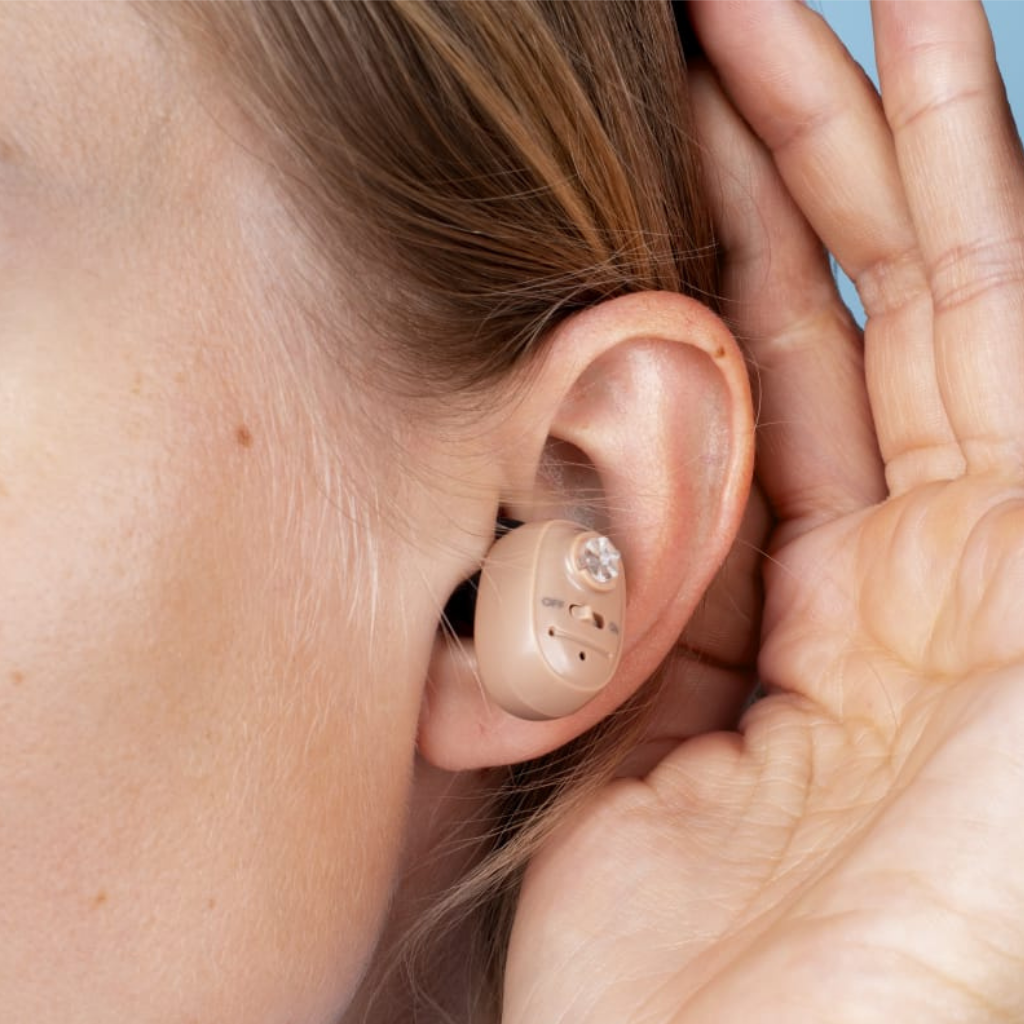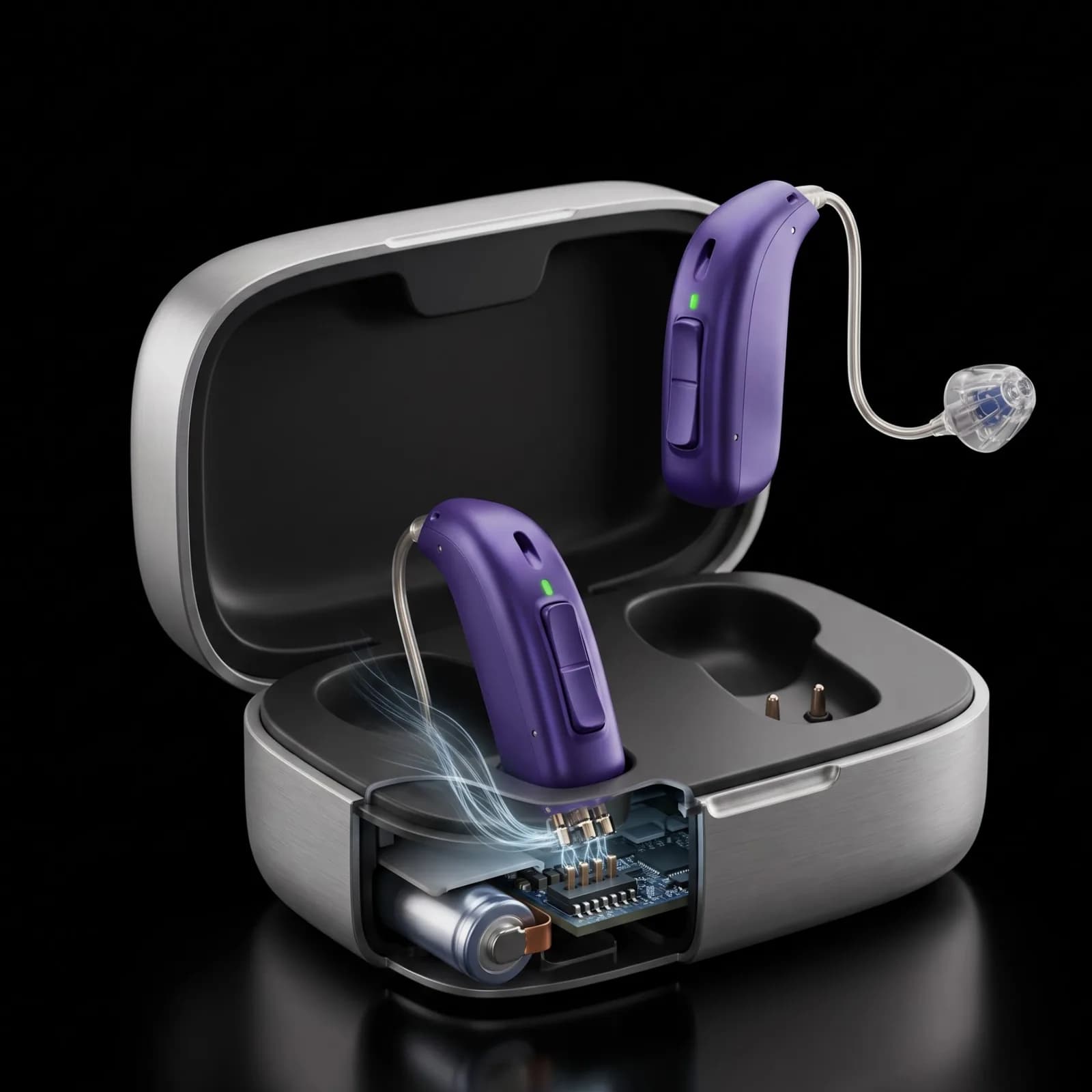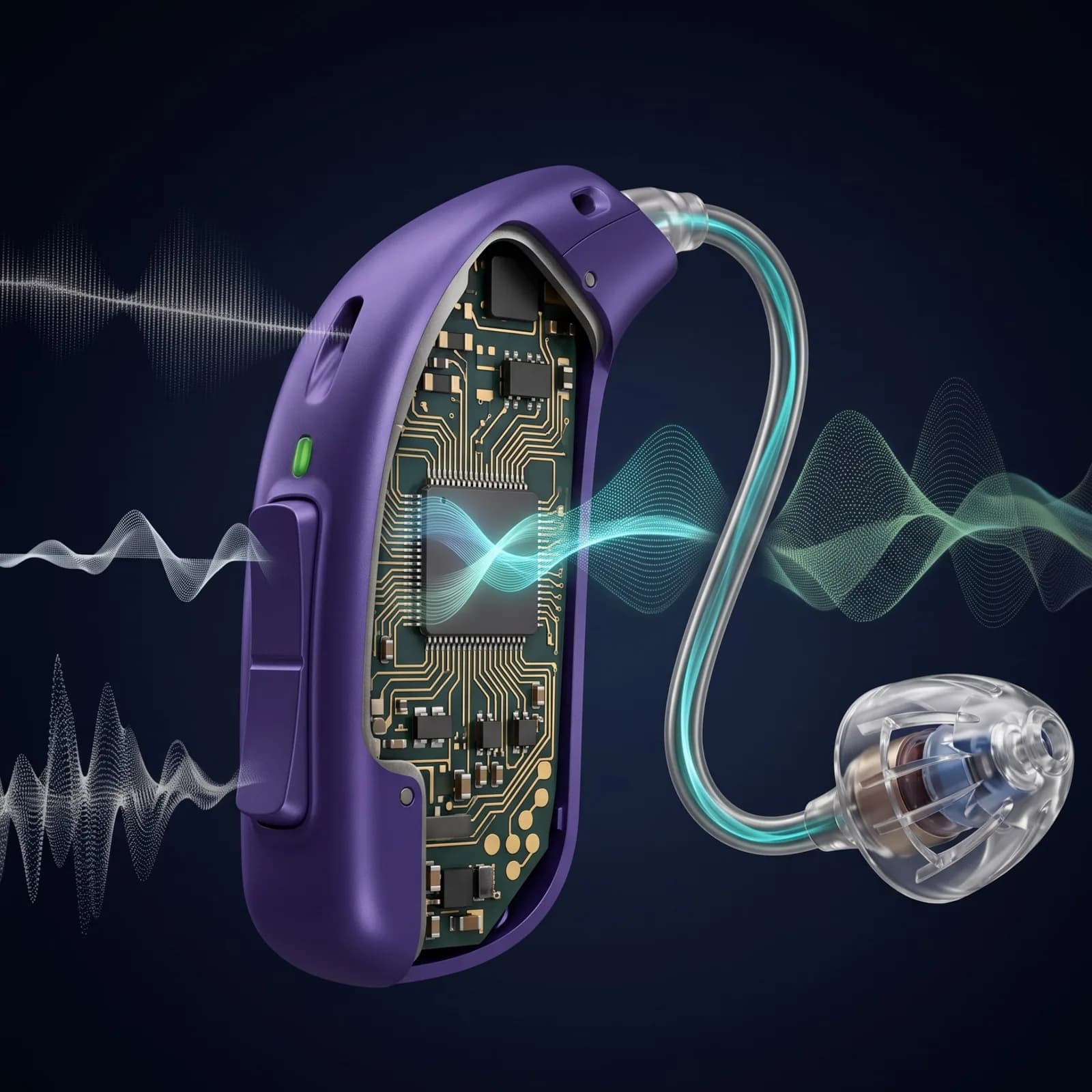
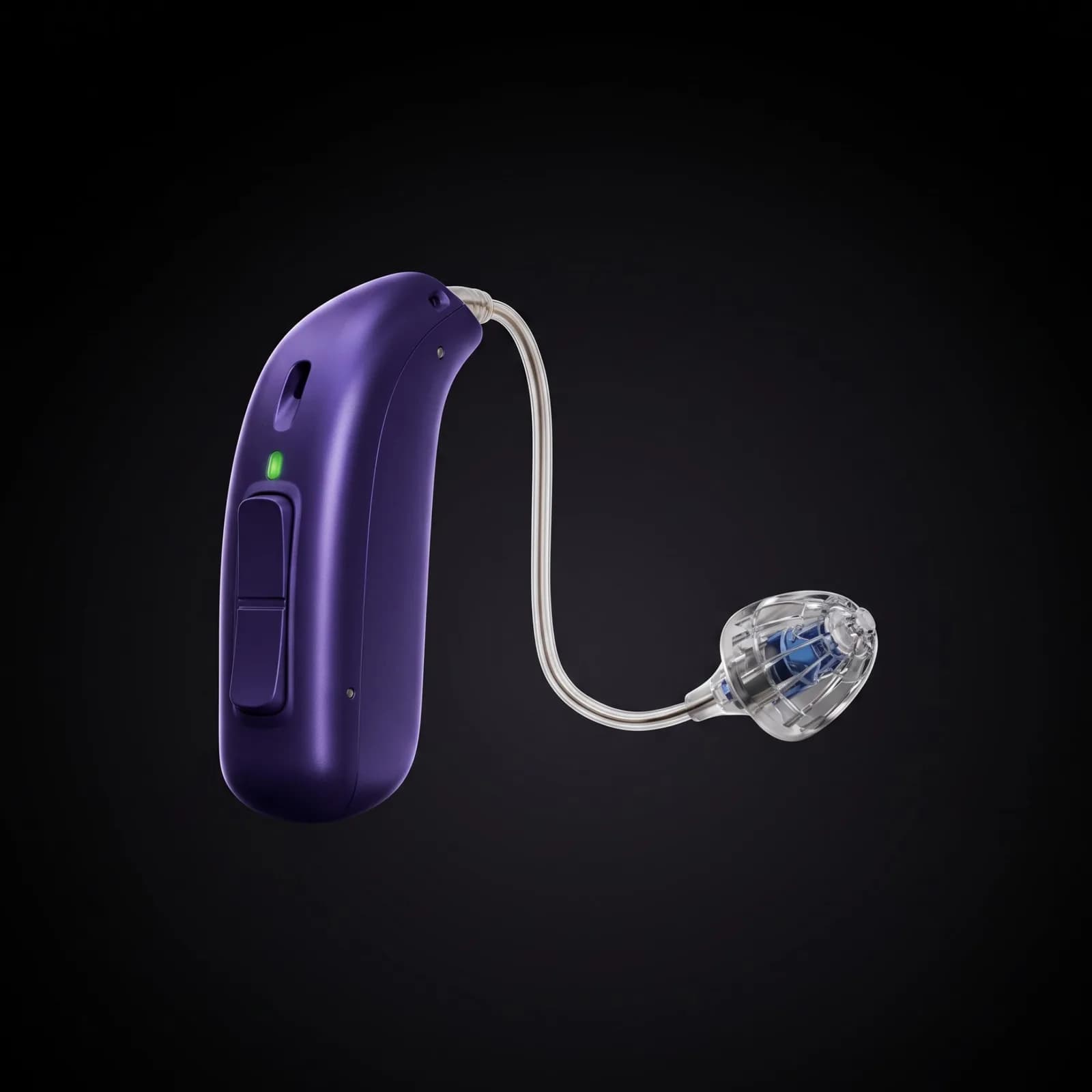
The single most common worry we hear at the clinic is not about sound at all. It is about being seen wearing a hearing aid. Invisible-in-canal (IIC) and completely-in-canal (CIC) devices exist precisely for this worry, and the engineering behind them is remarkable: a complete sound computer, microphone, processor, battery and speaker, shrunk into a shell smaller than a coffee bean.
It starts with a 3D map of your ear
No two ear canals are the same, so no two invisible aids are the same. Your audiologist takes a precise impression of your canal, and the shell is then 3D-modelled and built to follow its exact curves. That custom fit is what lets an IIC sit deep enough to vanish while staying comfortable for a full day. It also seals the device in place: no wind catching an external body, nothing to knock while pulling on a helmet or hugging a grandchild.
Your outer ear becomes part of the technology
Larger hearing aids place microphones behind the ear, then use processing to recreate the direction of sounds. Deep-canal devices do something more elegant: because the microphone sits inside the canal, sound reaches it after being gathered and shaped by your own outer ear, exactly as nature intended. The folds of the pinna subtly colour sound depending on where it comes from, and your brain has decoded those cues since childhood. The result is natural directionality: you sense whether a voice came from the left, the right or behind, without thinking about it.
Small size, full-scale processing
The biggest change of the last few years is that miniature devices no longer mean cut-down sound. Current IIC and CIC models carry the same processing platforms as their bigger siblings: chips that analyse the sound scene continuously, balance speech against background noise, and process sound in a way that supports how the brain naturally listens. In practice, the sound experience of a well-fitted invisible aid now rivals styles many times its size for mild to moderate hearing losses.
No whistling: feedback stopped before it starts
Older small aids were infamous for whistling, the squeal of amplified sound leaking back into the microphone. Modern feedback shields watch for the earliest signature of that loop and cancel it before it becomes audible, while keeping your prescribed amplification intact. A well-fitted modern CIC simply does not whistle during phone calls, hugs or hat weather.
The honest trade-offs
- Battery: the tiny shell holds a smaller battery, so expect more frequent changes than a rechargeable RIC
- Connectivity: deep placement limits Bluetooth streaming on many models; some support wireless accessories instead
- Suitability: very narrow canals or severe hearing loss may rule the style out, which is why the assessment comes first
- Handling: the removal cord is tiny; if dexterity is a concern, a custom ITC or a RIC may serve you better
Is invisible right for you?
If your hearing loss is mild to moderate, your canal shape cooperates and discretion is what has kept you from acting, an invisible aid can be life-changing: all the benefit, none of the visibility. The only way to know is to have your hearing mapped and your canal examined. At SoundBee in Kazhakkoottam we do both in a single visit, and you can compare an IIC against a RIC with your own ears before deciding anything.
Wondering which hearing aid suits you?
Get a free hearing test at SoundBee, Kazhakkoottam, and try the technology in this article with your own ears, on the same day.