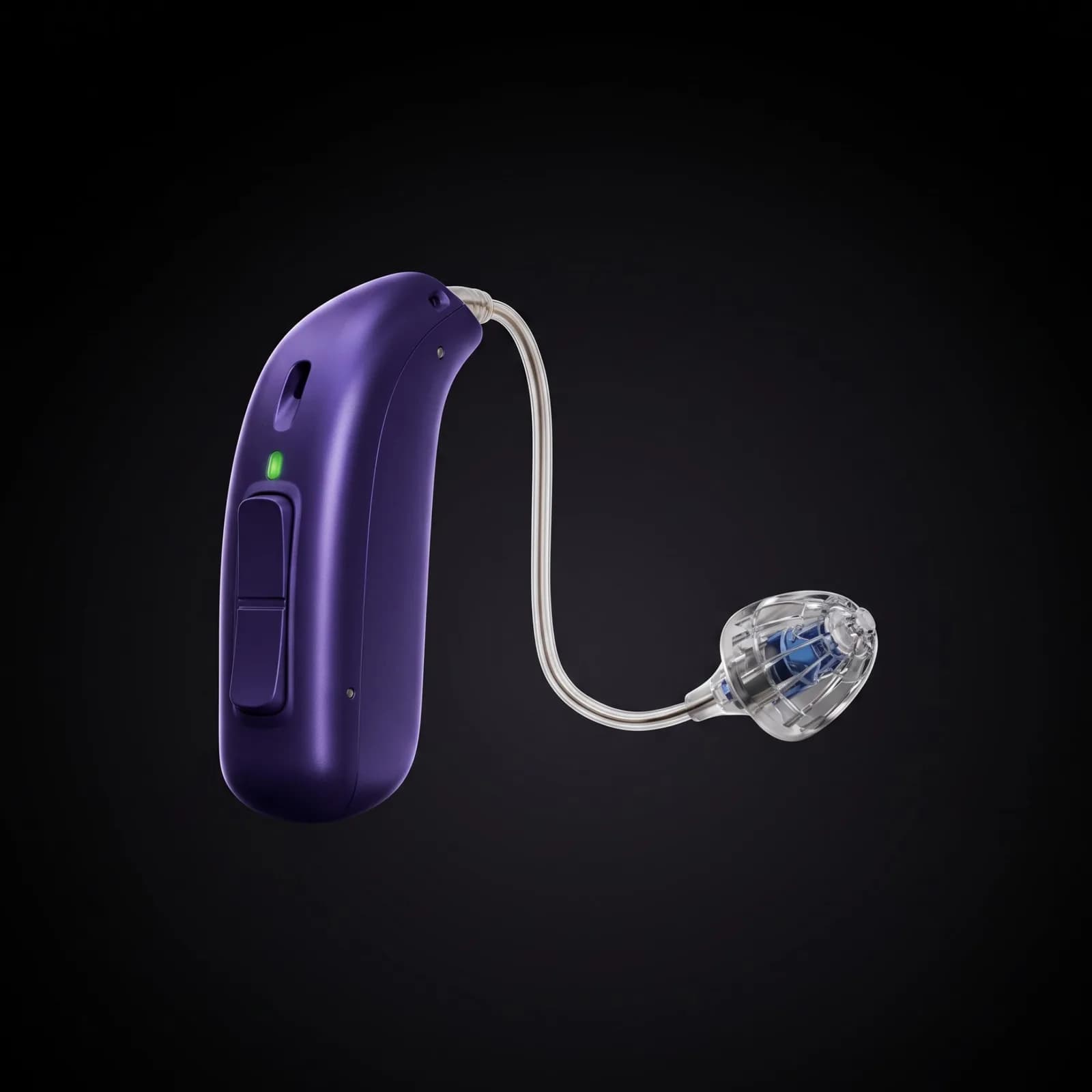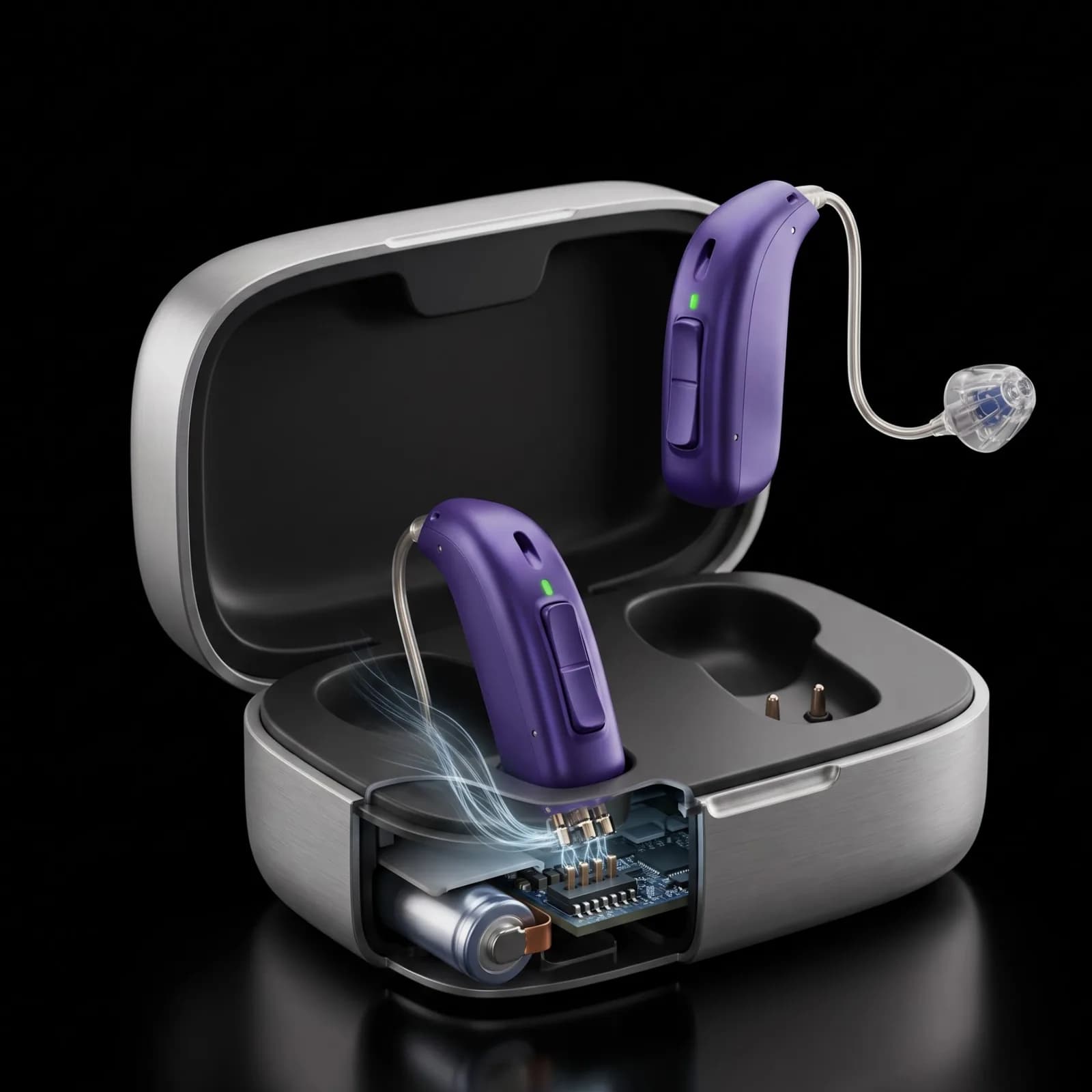
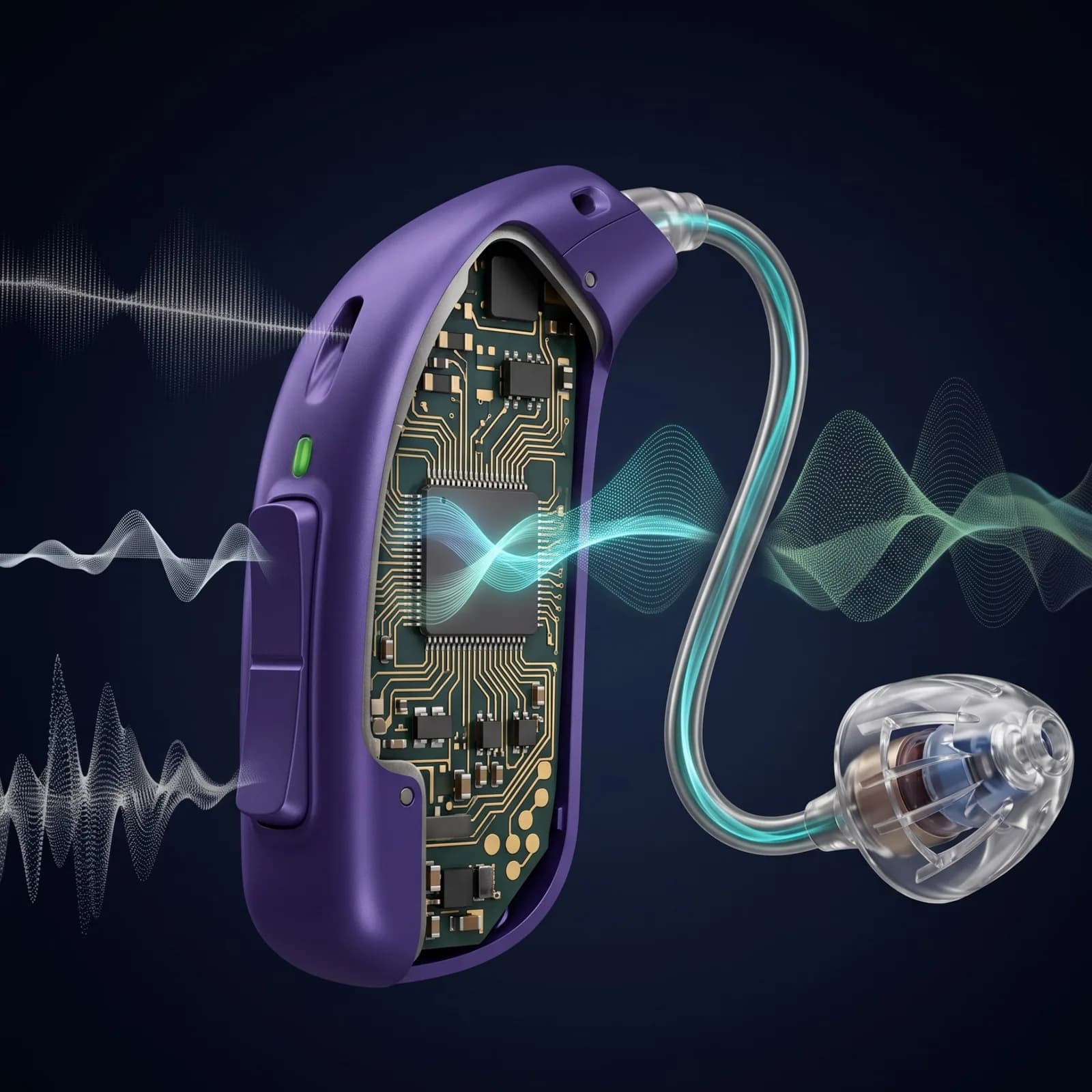
The phrase AI hearing aid gets used loosely, so it is worth being precise about what actually sits inside a current premium device: a purpose-built chip running an always-on deep neural network, fed by microphones and motion sensors, making rebalancing decisions about your sound scene hundreds of times every second. Here is how the pieces fit together, and why the end goal is your brain rather than your ear.
You hear with your brain, not just your ears
Ears collect sound; the brain makes sense of it. When hearing fades, the brain receives an incomplete signal and has to work overtime filling gaps, which is why untreated hearing loss is so tiring. The design philosophy behind the best modern devices follows from this: instead of amplifying speech alone and deleting everything else, they aim to deliver the full sound environment, clearly organised, so the brain can do what it evolved to do, focus, switch attention and stay oriented, with less effort.
A neural network trained on real life
At the heart of the current generation sits a deep neural network, the same family of technology behind modern speech recognition, but embedded in the chip itself and trained for one job: separating meaningful sound from noise. The leading networks have learned from more than twelve million real-world sound scenes, markets, traffic, kitchens, classrooms, rain. Because the learning came from reality rather than laboratory noise recordings, the processing holds up in the places that actually defeat older hearing aids, like a wedding reception or a busy NH 66 junction.
Sensors that read your intention
The newest platforms add something genuinely new: they do not just analyse the room, they read you. An embedded motion sensor tracks head and body movement while acoustic sensors track sound levels, the signal-to-noise ratio and whether conversation is happening. Turn your head towards a speaker and lean in, and the aids sense conversational intent, sharpening focus. Start walking, and awareness of your surroundings opens up for safety. Help arrives matched to what you are trying to do, not just where you are standing.
The quiet skills you only notice by their absence
- Sudden-sound balancing: slamming doors and clattering vessels are softened rather than muted, keeping you aware without the flinch, across hundreds of thousands of sound events a day
- Wind and handling stability: wind noise is detected and filtered before it reaches you, so beach walks and open car windows stay comfortable
- Feedback prevention: whistling is cancelled before it becomes audible, allowing full prescribed amplification all day
- Full-bandwidth sound: processing from 80 Hz up to 10,000 Hz preserves the depth of music and the richness of everyday environments
It keeps getting better after you buy it
Because the platform is essentially a small computer, manufacturers ship improvements as wireless firmware updates. The device you buy this year can gain refinements next year at a routine clinic visit or even remotely. Combined with remote fine-tuning by your audiologist, a premium hearing aid is now a living product rather than a fixed piece of hardware.
What this means when you choose
Technology levels within the same family look identical from outside; the difference is how much of this intelligence is switched on. That is why our advice at SoundBee is always the same: map your hearing precisely, describe your real week honestly, then trial the technology level in your own life before committing. If a mid-level device serves your situations well, we will say so. When the demanding environments of your week genuinely call for the full intelligence, you will hear the difference for yourself, and that difference is measured in energy left at the end of the day.
Wondering which hearing aid suits you?
Get a free hearing test at SoundBee, Kazhakkoottam, and try the technology in this article with your own ears, on the same day.