Ten years ago a hearing aid amplified sound and that was that. Today's devices are closer to tiny wearable earphones with a medical-grade brain: they recharge overnight, pair with your phone, answer calls hands-free and hand you fine control through an app. Here is what each of those features genuinely changes in daily life.
Rechargeable: the end of fiddly weekly batteries
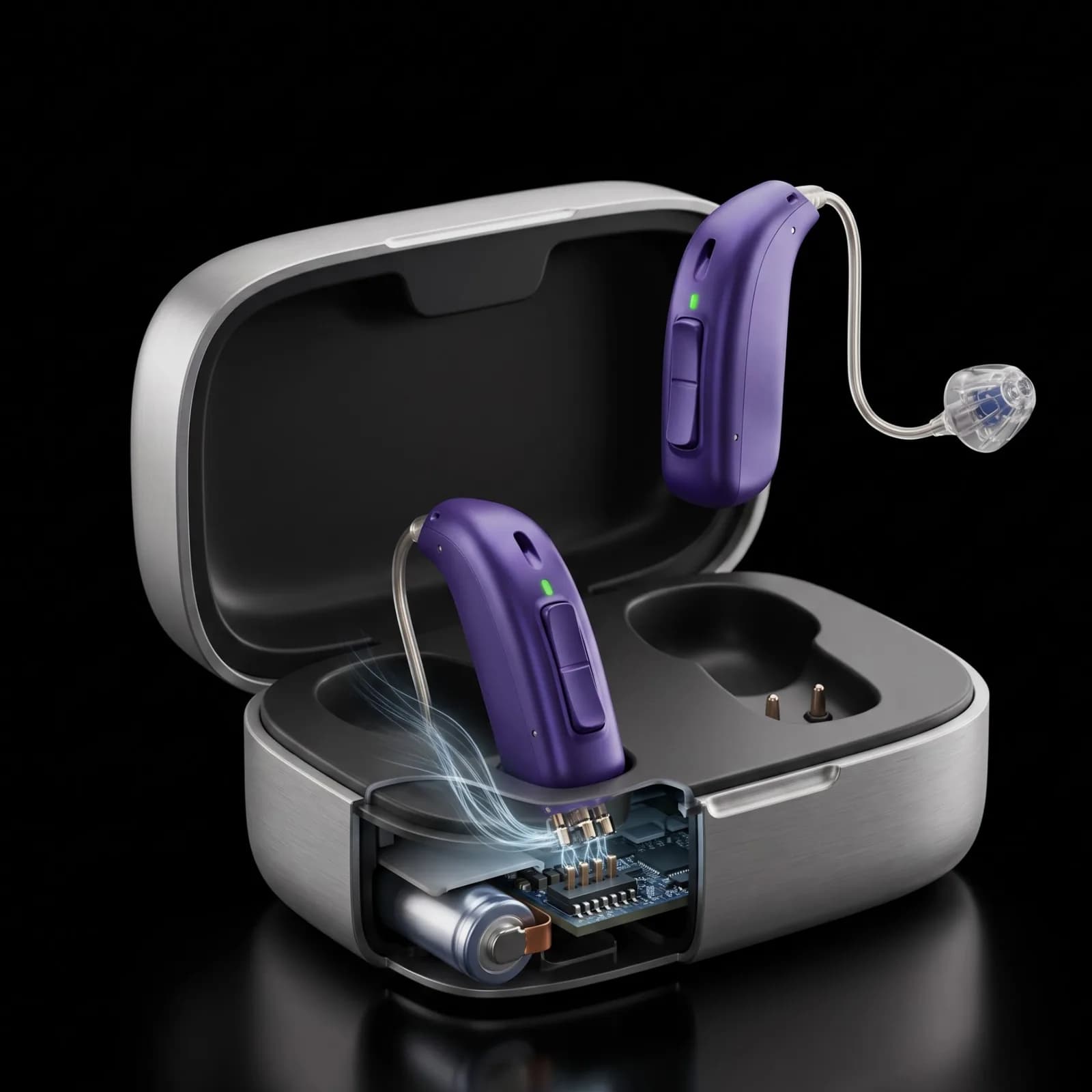
Modern rechargeable aids use sealed lithium-ion cells. The routine becomes identical to a phone: dock the aids in their case at night, wear them all day. A full charge comfortably covers a long day of listening including several hours of streaming, and a short top-up while you bathe adds hours more. For anyone who has chased tiny zinc-air batteries across a table, or for family members who manage a parent's devices, this alone justifies the upgrade.
Travel is covered too. Premium charging cases carry a built-in power bank, so the case itself recharges your aids for days without touching a wall socket. On an overnight train to Bengaluru or a long temple festival weekend, the case in your pocket is all the infrastructure you need.
Hands-free calls, through the hearing aids themselves
This is the feature that surprises people most. With current-generation Bluetooth aids, when a call comes you simply answer, and the hearing aids' own microphones pick up your voice while the caller's voice streams straight into both ears. The phone can stay in your bag. Because the audio is shaped by your personal hearing prescription, call clarity is often better than holding the phone to your ear ever was.
Direct streaming from iPhone and Android
Music, OTT dialogue, navigation prompts and video calls stream directly to both ears. Newer platforms support the latest low-energy Bluetooth audio standards, which cut battery drain while improving stability. For television, a small streamer box connected to the TV sends audio straight to your aids at your volume, while the family listens at theirs. The nightly serial stops being a volume negotiation.
The companion app: control without touching your ears
- Adjust volume and switch listening programs silently from your phone
- Shift listening focus in noisy rooms, useful at weddings and restaurants
- Check battery levels and connection status at a glance
- Find a misplaced hearing aid via its last known location
- Receive remote fine-tuning: your audiologist adjusts settings from the clinic while you sit at home
Accessories that extend your reach
Beyond the phone, a small clip-on remote microphone worn by a speaker streams their voice directly to your ears across a noisy hall, invaluable for meetings, classrooms and places of worship. Telecoil support connects you to loop systems installed in equipped auditoriums and airports.
What to check before you buy
Compatibility is specific: hands-free calling and direct streaming depend on your exact phone model and the aid's platform generation. This is why we check your own phone against the shortlisted devices during your consultation at SoundBee, and set every feature up before you leave. Bring your phone to the appointment; the technology only matters if it works with what is already in your pocket.
Wondering which hearing aid suits you?
Get a free hearing test at SoundBee, Kazhakkoottam, and try the technology in this article with your own ears, on the same day.